Late Client Changes During Fabrication
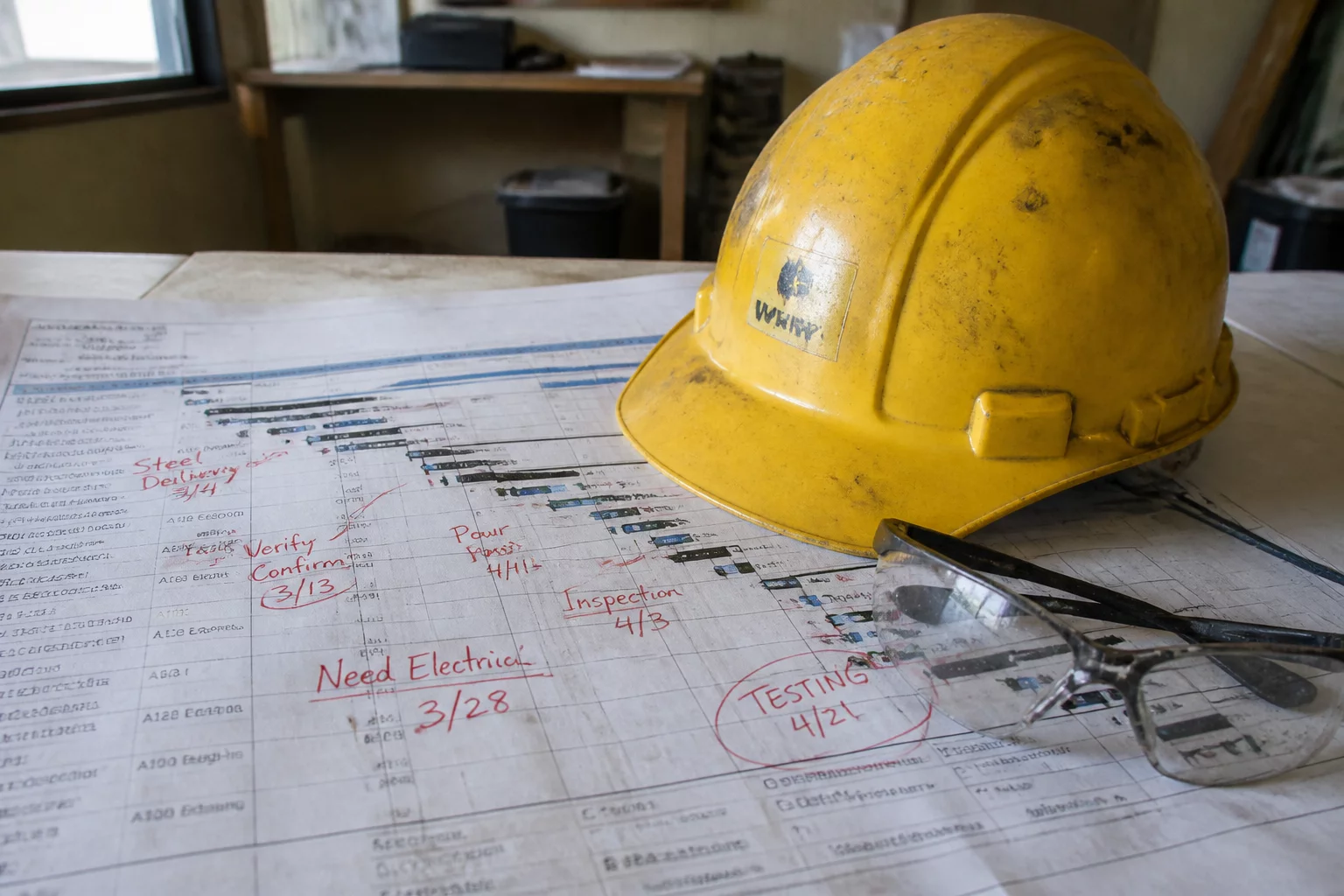
Initial State & New Revision
Initial State
The construction team finalized all structural steel workshop plans, and the fabrication shop had commenced cutting and welding primary beam assemblies. The design documents were fully signed off, and materials were procured based on the approved-for-construction (AFC) set.
New Revision
Midway through fabrication, the client requested a major revision to the equipment layout on the main mezzanine level. This change introduced new load paths, requiring heavier steel sections and modified connection details. A new revision package was issued to the fabrication yard, halting current work.
Conflicting Requirements & Unresolved Issue
Conflicting Requirements
The revised layout demanded immediately updating the shop drawings, but the fabrication shop was already working to the previous revision. Furthermore, the client expected the original delivery schedule to remain unchanged, despite the structural modifications and the lead times required to source the heavier steel sections.
Unresolved Issue
A critical bottleneck emerged because the client did not explicitly approve the cost variations and time extensions associated with the new steel profiles. The fabrication yard refused to resume production without a signed change order, while the design team was pressured to release updated IFC drawings without verified structural calculations.
Decision Owner & Review Outcome
Decision Owner
The Project Director was appointed as the Decision Owner. Their responsibility was to mediate between the client's engineering team, the fabrication yard's scheduler, and the structural design firm to formalize the change orders and release a verified set of drawings.
Review Outcome
The review outcome established that fabrication would be paused on the affected mezzanine sections for exactly 10 days to allow for revised engineering calculations and change order approval. Non-affected structural zones continued fabrication. The client agreed to cover the material scrap costs, and a formal revision tracking process was implemented using the DrawingOutcome matrix.
Discussion & Feedbacks
There are no comments for this case yet. Be the first to share your thoughts.